Wondering why two homes with the same Bridgehampton zip code can feel completely different? That is one of the biggest reasons buyers and sellers can get tripped up in 11932. Bridgehampton is not one uniform market, and if you understand how its farm, village, and oceanfront areas differ, you can read listings more clearly and make smarter decisions. Let’s dive in.
Why Bridgehampton feels like three markets
Bridgehampton is a hamlet and census-designated place within the Town of Southampton, not an incorporated village government. The 2020 Census profile shows about 13.0 square miles of land, 2,953 residents, and 2,315 housing units. That alone helps explain why one small place can offer several very different living experiences.
Town zoning and planning documents show Bridgehampton stretching across multiple settings, from the Main Street core to agricultural land and the coastal south side. In practice, that means buyers are often comparing micro-markets rather than choosing within one consistent neighborhood pattern. If you are buying, selling, or renting in Bridgehampton, that distinction matters.
Village living in Bridgehampton
When people say “village” in Bridgehampton, they usually mean the compact hamlet center around Main Street, Montauk Highway, Ocean Road, and the Bridgehampton-Sag Harbor Turnpike intersection. Town planning and historic-district documents describe this area as the local center for retail, civic, and religious uses. It is the most active and walkable part of Bridgehampton.
This part of the hamlet also carries a strong historic identity. Town documents note roots going back to the Bull’s Head era in the 1600s and point to the railroad’s arrival in 1870 as a key part of the area’s development. Many commercial buildings were once houses, and the older wood-and-brick building character still shapes the feel of the streetscape today.
For you as a buyer, village living often means convenience first. Listings that say “close to town,” “near Main Street,” or “near the station” usually point to this central area. You may get easier access to shops and services, but you should also expect more activity, more visibility, and less seclusion than in other parts of Bridgehampton.
The town’s planning documents also note traffic and parking spillover near the station area, especially on Friday evenings. That does not make the area less desirable, but it does mean lifestyle fit matters. If you want to walk to the center and enjoy a more connected daily rhythm, this area may suit you well.
What village buyers should expect
- More walkability and easier access to local businesses
- A more historic streetscape and established hamlet character
- Smaller-feeling settings compared with larger estate areas
- More traffic exposure and less privacy than farm or coastal sections
- Convenience near the station and Bridgehampton Commons, depending on location
Farm living and open-space corridors
Another major part of Bridgehampton is defined by farmland, preserved open space, and larger-lot settings. Southampton Town’s Community Preservation Project Plan says the Agricultural Overlay District was created in 1972 to protect the Bridgehampton and Haven soil associations, which it describes as among the most productive agricultural soils in New York State. The district covers 4,515 parcels and 13,550 acres and plays a central role in the town’s rural-and-resort character.
Bridgehampton’s hamlet-center plan also says the community’s identity depends on historic buildings, open space, farmland, and open vistas. That language is important because it explains why so much of the area feels visually open even when homes are substantial and private. The landscape itself is part of the value story.
If you see listing language like “acreage,” “farm views,” “barn,” “compound,” or “open land,” you are often looking at this side of Bridgehampton. Town planning study areas around Snake Hollow Road, Corwith Road, and Hayground help support that pattern. These are the parts of Bridgehampton that often feel more spacious, more estate-like, and more tucked away.
For many buyers, the appeal here is privacy and breathing room. You may find larger setbacks, broader views, and a more rural visual character than in the hamlet center. If your priorities include land, quiet, and a stronger sense of separation from the busiest corridors, this is often where your search gets more focused.
What farm-area buyers should expect
- Larger lots and a more private feel
- Open vistas shaped by farmland and preserved land
- A more rural setting than the Main Street core
- Estate-style living patterns in many pockets
- Less of a walk-to-town experience
Oceanfront and ocean-adjacent living
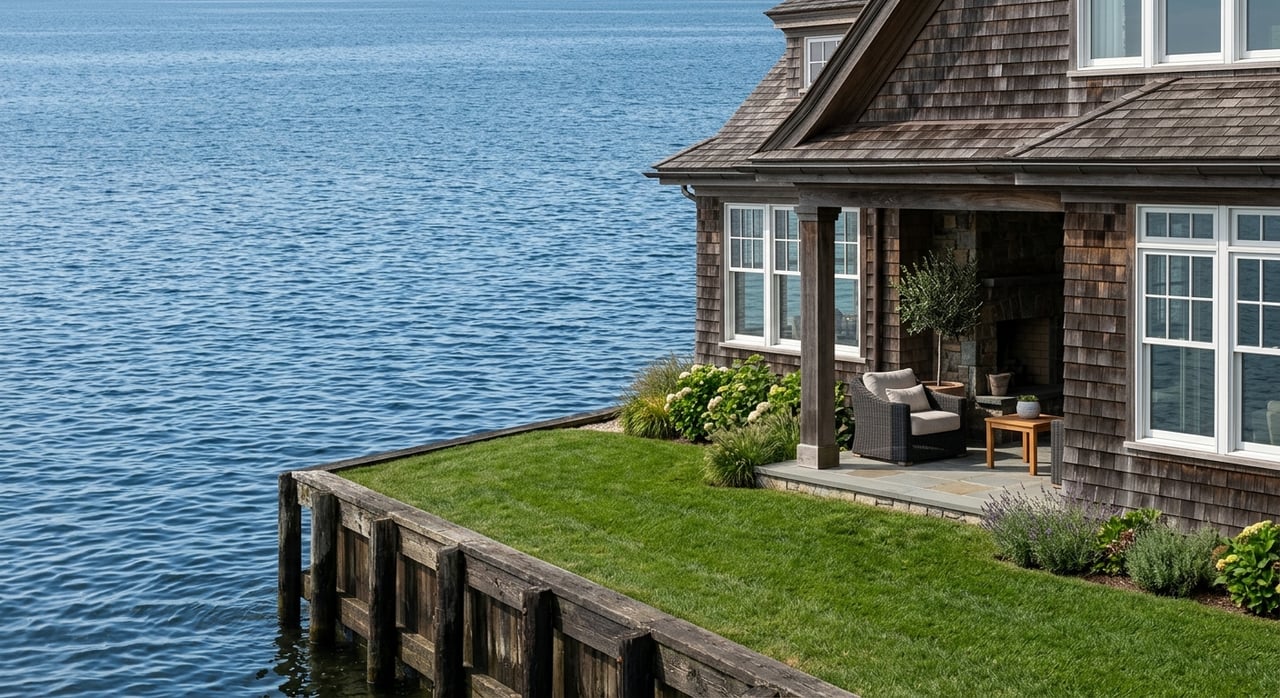
Bridgehampton’s south side is the most coastal part of the hamlet. Official zoning maps and town planning documents show attention along the Montauk Highway corridor from Snake Hollow Road to Ocean Road, with Ocean Road and the Bridgehampton-Sag Harbor Turnpike identified as key gateways. This helps explain why the south side often feels distinct from both the village core and the farm corridors.
In listing language, “south of Montauk,” “near Ocean Road,” or “ocean-adjacent” usually points to this more coastal setting. These areas often read as more private and more seasonal in rhythm. That interpretation comes from the geography and from town circulation planning, which specifically addresses off-street parking, traffic studies, and even a possible roundabout in this part of Bridgehampton.
For you, that often translates into a different lifestyle cadence. Coastal Bridgehampton can feel more tucked away than the village center, but it can also be more sensitive to peak-season movement and weekend traffic. If you are considering a second home, seasonal rental, or long-term hold, this is one of the most important tradeoffs to understand.
What ocean-adjacent buyers should expect
- A more coastal setting on Bridgehampton’s south side
- Greater privacy in many locations than the hamlet center
- More seasonal energy during peak periods
- Traffic sensitivity near key corridors and gateways
- A lifestyle that often appeals to second-home and rental-minded buyers
How to decode Bridgehampton listing language
Bridgehampton listings often use shorthand, and knowing how to read it can save you time. A phrase that sounds simple can tell you quite a lot about the setting before you ever book a showing. The key is to connect listing language to the town’s geography and planning framework.
Here is a practical decoder based on the local planning record:
| Listing phrase | What it usually signals |
|---|---|
| Near town | The compact Main Street core with more activity and convenience |
| Walk to Main Street | A central, walkable setting with less land and more visibility |
| Near the station | Convenience, plus more parking and traffic pressure |
| Near Bridgehampton Commons | Practical retail access rather than a secluded enclave |
| Farm views | The agricultural or open-space corridors |
| Acreage | Larger lots and a more estate-like setting |
| South of Montauk | The more coastal side of Bridgehampton |
| Near Ocean Road | Ocean-adjacent living with seasonal traffic considerations |
This kind of interpretation is especially useful when you are comparing homes online. Two listings may have similar price points, but the daily experience can be very different depending on whether the property sits near Main Street, in the farm belt, or closer to the coast.
Choosing the right Bridgehampton setting
The best area for you depends on how you want to live, not just what you want to buy. If you value convenience, local activity, and a classic hamlet center feel, the village core may be your best match. If you want more land and a quieter visual environment, the farm corridors often make more sense.
If your goals center on coastal access, seasonal use, or a more private retreat-like setting, the south side deserves close attention. For sellers, this same framework helps position a property more clearly. Buyers respond better when a home is presented in the context of its actual micro-market instead of being marketed as if all of Bridgehampton feels the same.
Why micro-market knowledge matters
In a place like Bridgehampton, local context is not a bonus. It is essential. The town’s own planning documents make clear that the hamlet includes a historic center, preserved agricultural character, and coastal gateways that shape traffic, privacy, and day-to-day living.
That is why real guidance in Bridgehampton starts with location inside the location. Whether you are buying a first Hamptons home, selling an estate property, or evaluating a seasonal rental opportunity, understanding these distinctions helps you make a more confident move.
Bridgehampton rewards buyers and sellers who look past the zip code and focus on the exact setting. If you want help sorting through village, farm, and ocean-adjacent options in a way that matches your lifestyle and investment goals, Bill Williams offers practical local guidance backed by deep South Fork market experience.
FAQs
What does village living in Bridgehampton usually mean?
- In Bridgehampton, “village” usually refers to the compact Main Street hamlet center around Main Street, Montauk Highway, Ocean Road, and the Bridgehampton-Sag Harbor Turnpike intersection, not an incorporated village government.
What does farm-area living in Bridgehampton usually mean?
- Farm-area living in Bridgehampton usually refers to the agricultural and open-space corridors where listings may mention acreage, open land, barn features, or farm views, often with larger lots and a more private feel.
What does ocean-adjacent living in Bridgehampton usually mean?
- Ocean-adjacent living in Bridgehampton usually refers to the hamlet’s south side, including areas near Ocean Road or south of Montauk Highway, where the setting can feel more coastal, more private, and more seasonal.
Why do Bridgehampton listings feel so different from one another?
- Bridgehampton listings can feel very different because the hamlet functions as several micro-markets, including the historic Main Street core, the farm and open-space corridors, and the coastal south side.
What does near the station mean in Bridgehampton listings?
- In Bridgehampton listings, “near the station” usually suggests a convenient central setting with easier access to the hamlet core, along with more exposure to traffic and parking activity.
What does near Bridgehampton Commons mean for a property?
- In Bridgehampton, “near Bridgehampton Commons” usually points to practical retail convenience and access rather than a more tucked-away residential setting.