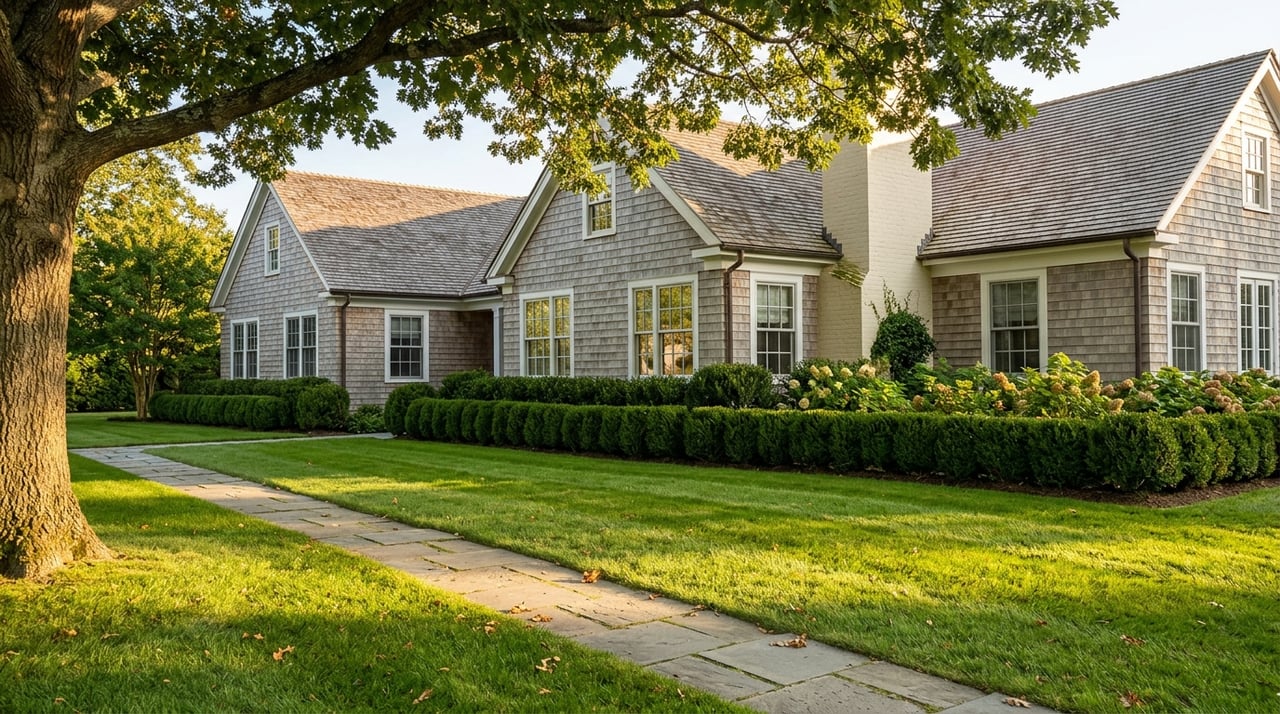
If you are looking for a part of the Hamptons that feels protected rather than overbuilt, Sagaponack stands apart fast. This small village has built its identity around open land, preservation, and careful change, which is a big part of why buyers and owners continue to value it so highly. When you understand how the landscape, rules, and housing mix work together here, you get a much clearer picture of what makes Sagaponack so exceptional. Let’s dive in.
Sagaponack Starts With Setting
Sagaponack is a small incorporated village in Suffolk County, in the Town of Southampton, between Bridgehampton and Wainscott. The village says it was established in 1653 and incorporated in 2005, and it spans 4.56 square miles.
What gives that setting weight is not just the map. The village also describes roughly 350 year-round residents and more than 1,000 part-time residents, which helps explain why Sagaponack often feels quiet, understated, and distinctly separate from busier Hamptons destinations.
Preservation Shapes Local Identity
In Sagaponack, preservation is not a marketing phrase. It is built into how the village thinks about land, scenery, and long-term value.
Village land-use materials track existing land use, public lands, agricultural districts, easements, watersheds, and zoning. That level of planning shows that stewardship is central to the village’s identity.
The village code is equally clear. It states that land should be used for the purposes for which it is most appropriate, including preserving prime agricultural lands, natural areas, scenic beauty, and historical resources along the ocean, bays, estuaries, and watercourses.
Farmland Still Matters Here
Sagaponack’s landscape is closely tied to agriculture. Village planning materials describe Class I and II prime agricultural soils, and they note that part of the Long Pond Greenbelt lies within the village.
That matters because prime soils and open land are not treated as leftover space. They are part of the character the village is actively trying to retain.
In the Agricultural Overlay District, subdivision is allowed only if open space is preserved at 35%, 50%, or 65%, depending on zoning. The village code also bars removal of Class I and II agricultural soils except as part of approved construction.
The code goes further by stating that the village will work cooperatively with the Town of Southampton and property owners to establish agricultural easements and avoid nonagricultural development. Suffolk County reinforces this approach through its farmland preservation program, which purchases development rights so farmers can keep ownership while the land remains restricted to agricultural use.
Natural Features Are Protected
Sagaponack’s appeal is also tied to its coastal and environmental setting. The village’s design standards call for preserving beaches, dune lands, wetlands, bluffs, prime agricultural soils, unique vegetation and animal habitat, floodplains, watercourses, primary groundwater sources, and natural drainage patterns.
Those standards are not broad statements with no follow-through. They also require careful wetland buffers, bluff setbacks where practicable, and coastal bulkheading that does not damage the natural marine edge.
Scenic Restraint Adds Value
This framework helps explain why Sagaponack feels different from places built around activity and intensity. Here, scenic restraint is part of the product.
The village history says Sagaponack changed little for generations and historically had one school and one store. That continuity, paired with strict land-use and environmental standards, supports the sense that the village has held onto its original landscape more successfully than many coastal markets.
Architecture Is Carefully Managed
Another reason Sagaponack stands out is that exterior change is not left entirely to chance. The village maintains an Architectural & Historic Review Board and keeps both a Sagaponack Historic District inventory and an inventory of historic structures outside the district.
That tells you something important as a buyer or owner. Village character is protected not only through land preservation, but also through active review of the built environment.
Historic Districts Reinforce Continuity
The official historic district map identifies the district as parcels in the State and National Registers of Historic Places. In practical terms, that means Sagaponack’s historic character is formally recognized and monitored.
The AHRB materials also reference a gate style guide. It is a small detail, but it reveals how even secondary design features are expected to fit the village character.
The Housing Mix Feels Estate-Oriented
An older village planning appendix classified 80 buildings as “Exceptional Homes” and 600 as single-family residences out of 712 total buildings. Because that is an older planning snapshot, it is best viewed as context rather than a current inventory.
Even so, it helps explain the built pattern many people associate with Sagaponack. The housing stock has long leaned toward substantial single-family homes rather than dense development.
Why Sagaponack Feels So Exclusive
Sagaponack is often described as exclusive, but the better explanation is structural. Its sense of rarity comes from scarcity, preservation, and restraint rather than spectacle.
The village is small. Its resident base is limited. Development is shaped by preservation rules, agricultural protections, environmental standards, and architectural oversight. Together, those factors reduce the likelihood of rapid change and help protect long-term character.
For buyers, that can translate into a very specific kind of appeal:
- More open land and less visual clutter
- A setting shaped by dunes, wetlands, farmland, and large residential parcels
- A built environment with strong review standards
- A location between Bridgehampton and Wainscott that is residential rather than commercial in identity
- Long-term desirability tied to scarcity and stewardship
Seasonal Rental Rules Also Affect Atmosphere
Sagaponack’s quieter feel is not just about land use. Seasonal rentals are also tightly managed.
The village requires a seasonal rental permit for rentals between May 15 and September 15. During that period, the minimum rental term is 30 days, except for two 2-week rentals per calendar year.
For owners and prospective buyers, that policy is worth understanding because it shapes how the village functions during peak season. It is one more reason Sagaponack can feel more controlled and less transient than a typical beach market.
What This Means If You Are Buying
If you are considering Sagaponack, it helps to look beyond price and square footage. In this village, value is closely tied to setting, preservation context, and the rules that shape future change.
You may want to pay close attention to:
- Zoning and overlay district conditions
- Wetlands, bluffs, and setback considerations
- Historic district or AHRB review implications
- Agricultural easements or nearby preserved land
- Seasonal rental rules if rental use is part of your ownership plan
This is where local guidance matters. A property in Sagaponack is not just a house on a lot. It is part of a tightly shaped environment where land use, design review, and preservation policy can directly affect both lifestyle and long-term value.
What This Means If You Are Selling
If you own in Sagaponack, the village’s defining traits can become part of a thoughtful marketing story. Buyers are often responding to more than finishes and amenities. They are also responding to scarcity, privacy, protected surroundings, and the confidence that the village takes stewardship seriously.
That means a strong sales strategy should frame the property within its larger setting. Proximity between Bridgehampton and Wainscott, surrounding open land, estate-oriented housing patterns, and the preservation framework are all part of what supports buyer interest here.
For some sellers, discretion matters just as much as exposure. In a market shaped by rarity, tailored positioning and informed local counsel can make a meaningful difference.
Sagaponack’s Appeal Is Lasting
What makes Sagaponack truly exceptional is not one single feature. It is the combination of prime agricultural land, protected natural features, historic continuity, estate-oriented housing, and a local framework designed to resist careless change.
That combination is increasingly rare. In a region where demand remains strong, Sagaponack’s commitment to preservation helps explain why it continues to hold such a distinct place in the Hamptons.
Whether you are buying, selling, or weighing a seasonal ownership strategy, understanding those local dynamics is essential. If you want practical guidance on Sagaponack and the broader South Fork, schedule a market consultation with Bill Williams.
FAQs
Is Sagaponack in Nassau County?
- No. Sagaponack is in Suffolk County, in the Town of Southampton.
What makes Sagaponack different from other Hamptons areas?
- Sagaponack stands out for its preservation-focused identity, with strong protections for farmland, natural features, scenic character, and historic resources.
Why is farmland such a big part of Sagaponack?
- Village code treats prime agricultural land as a core public interest, and Suffolk County’s farmland preservation program helps keep farmland in agricultural use by purchasing development rights.
Does Sagaponack have historic review rules?
- Yes. The village has an Architectural & Historic Review Board, a historic district inventory, and an inventory of historic structures outside the district.
Are seasonal rentals allowed in Sagaponack?
- Yes, but they are tightly regulated. Rentals between May 15 and September 15 require a seasonal rental permit, with a 30-day minimum term except for two 2-week rentals per calendar year.
Why does Sagaponack feel so private?
- Its small resident base, large part-time population, preservation rules, and architectural oversight all contribute to a quieter, more restrained atmosphere.