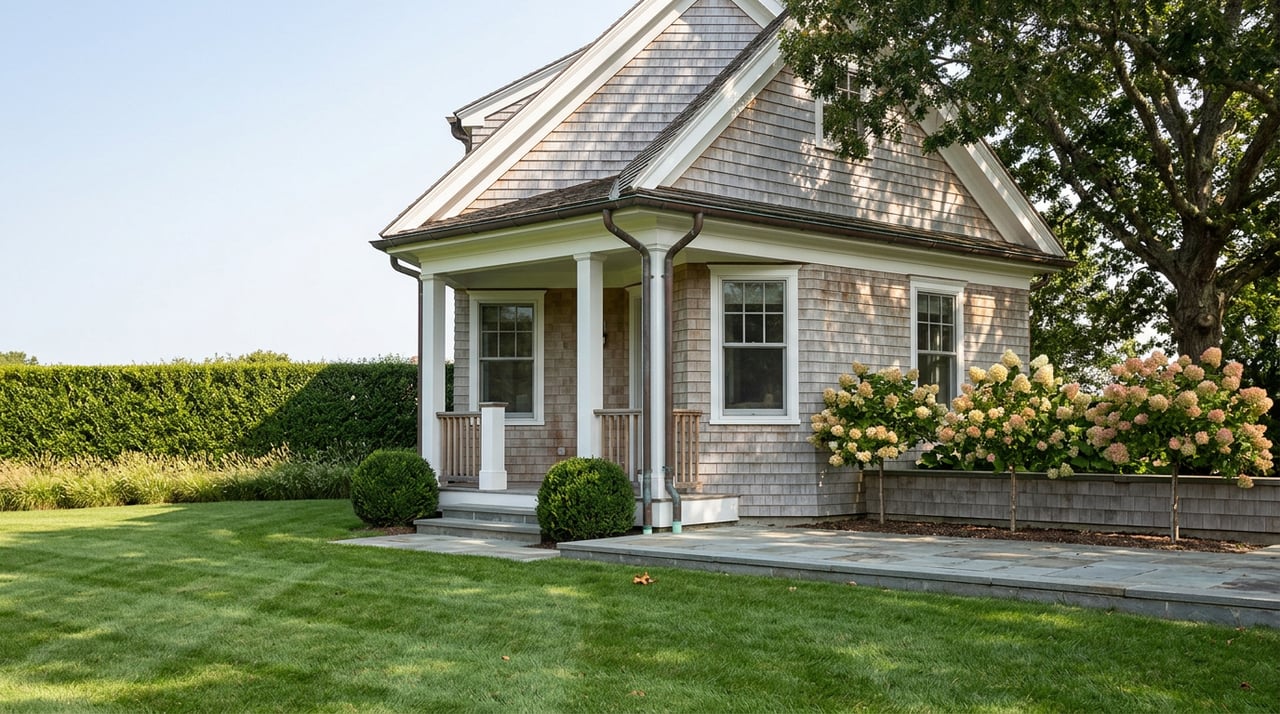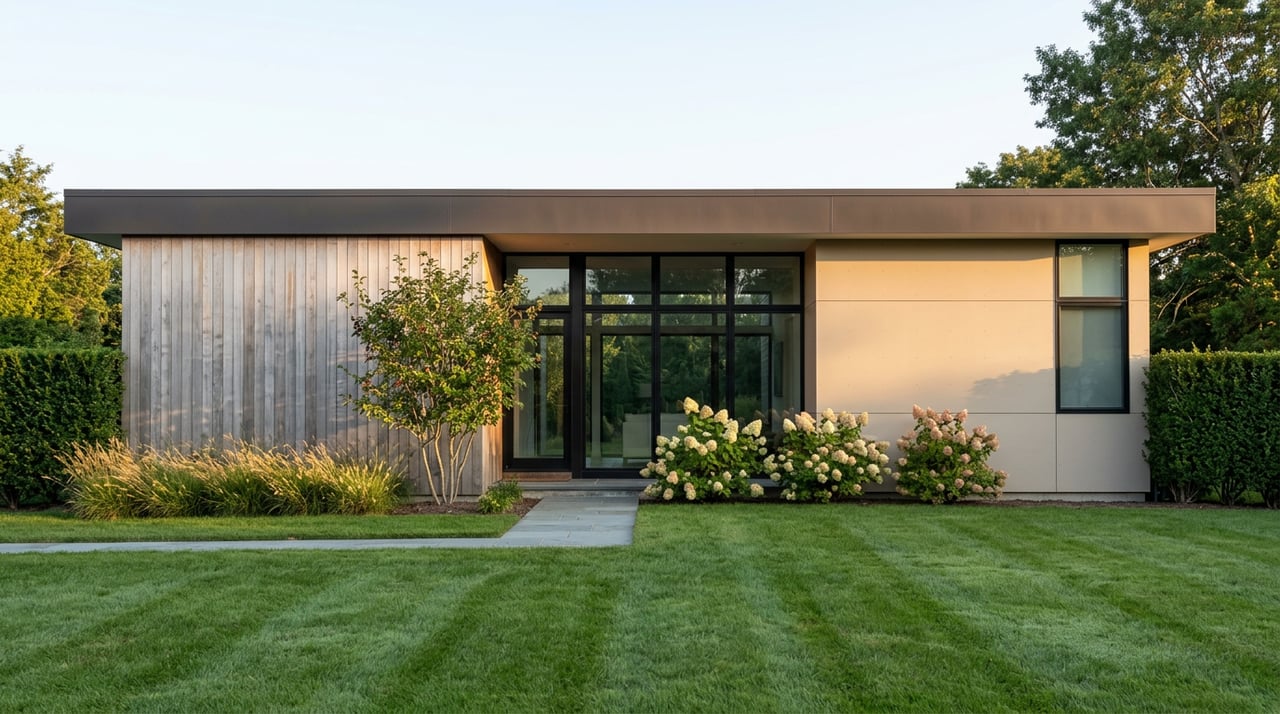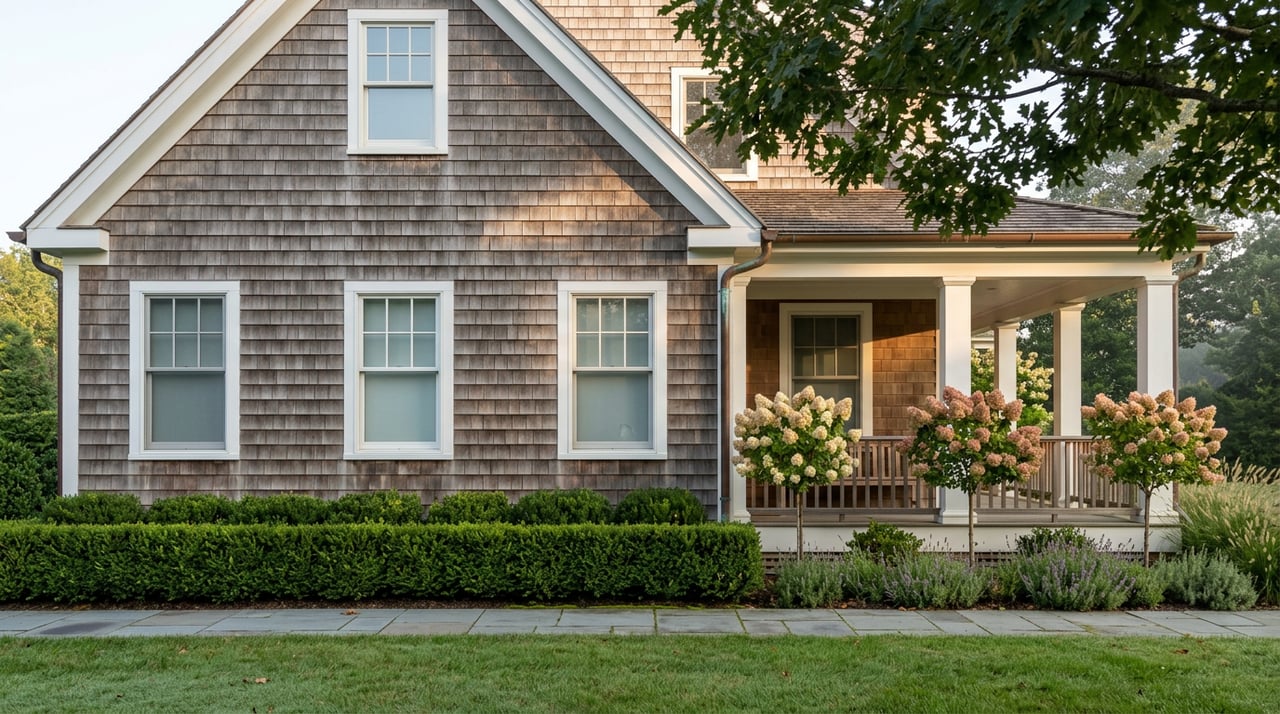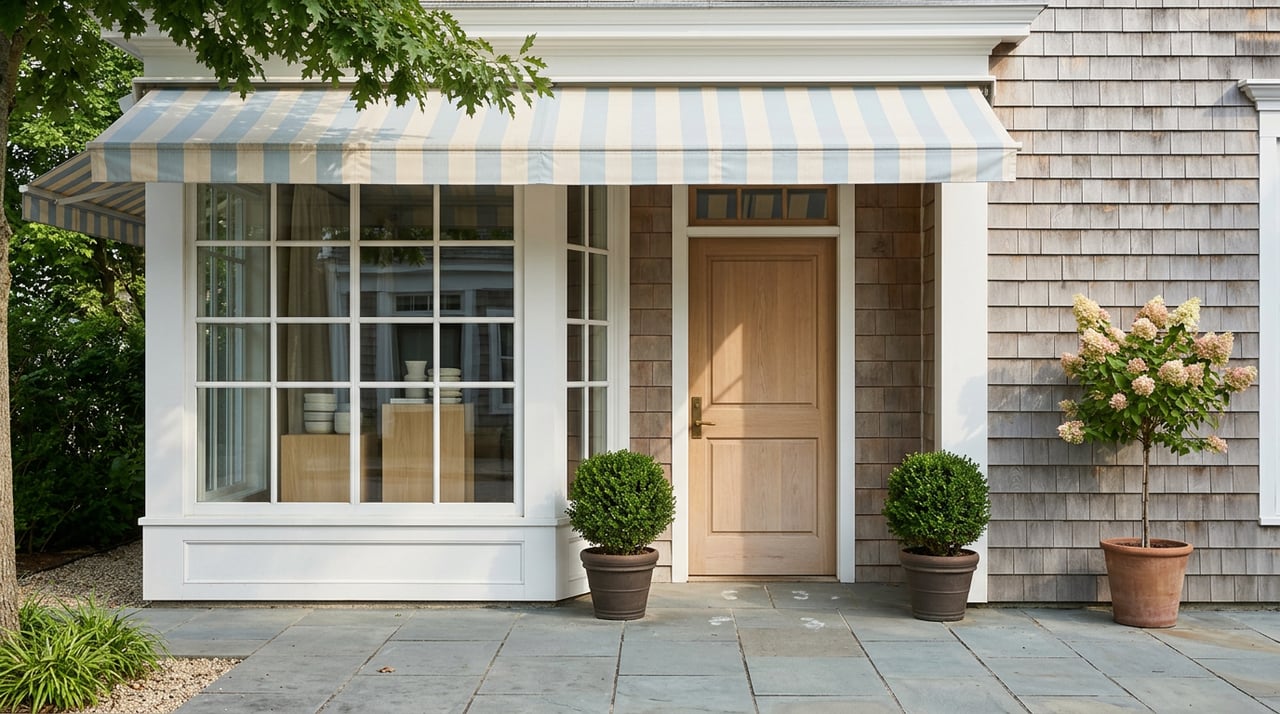
The corner of Wainscott Main Street and Beach Lane is doing what it always does in early August. Babinski's family stand is stacked with peaches, nectarines, and cut bouquets, and the line at The Seafood Shop on Montauk Highway snakes past the door by five o'clock. What is not usual is what is happening a half-mile in three different directions from that same corner. Three addresses, three separate proceedings, and the outcome of any one of them changes how residents will describe this hamlet by next summer.
If you live here, this is the piece to read before the next Citizens Advisory Committee meeting. If you have owned a house here for twenty years, at least one of the three items below is probably news.
A Hamlet You Can Walk in an Afternoon
Wainscott is small enough that residents describe it by corners rather than by streets. The Chapel at 65 Wainscott Main Street sits across from Wainscott Pond. Babinski Farm's stand is one intersection south, at Main and Beach Lane, and it remains a family operation known for stone fruit, herbs like sage and tarragon, and cut flowers. The commercial spine along Montauk Highway holds Levain Bakery's Wainscott shop at 354 Montauk Highway, open year-round and baking on site, alongside The Seafood Shop, which most full-time households treat as the default fish counter rather than driving into East Hampton or Bridgehampton.
Head north from the highway and the character shifts within a quarter-mile. Industrial Road holds LTV Studios at number 75, which the Wainscott Heritage Project has been using as a screening venue. Keep going and you reach Wainscott Northwest Road, wooded and thinly built, which is where one of the three stories below is playing out.
That is the whole hamlet. Under 700 official residents, a one-room schoolhouse tradition that dates to 1730, and boundaries most locals could sketch on a napkin. The scale is what makes the current moment unusual: three separate proceedings, all within a mile of each other, all live in August.
What's Actually on the Community Calendar
Before the civic material, the things residents put on the fridge:
- August 1, 10 AM — Wainscott Chapel. "Strange But True — Stories from Wainscott's Past," a historical talk presented by Hilary Osborn Malecki, an Osborn descendant and president of the Wainscott Sewing Society. Free, walk-in.
- Third Saturday in August — Chapel Rummage Sale. The line forms before the doors open, per the Chapel's own event page. Donations are accepted the day before. Proceeds support the Chapel, a nonprofit community center since 1908.
- All month — Beach Lane. Wainscott Beach at the end of Beach Lane is administered by the Town of East Hampton. Parking and drive-on access require permits, and enforcement is at peak intensity from now through Labor Day.
- Ongoing — Wainscott Heritage Project. Programming at the Chapel and at LTV Studios (75 Industrial Road). WHP has partnered with Build.In.Kind/East Hampton on screenings of One Big Home, the Chilmark documentary about resident-led limits on house size, which is worth flagging given the civic conversation described below.
That is the surface. Now the substrate.
Three Addresses to Know This Month
66 Wainscott Main Street
The Town of East Hampton has moved toward acquiring the 30-acre Osborn parcel at 66 Wainscott Main Street using $56 million from the Community Preservation Fund. If it closes, it will be the largest CPF purchase in Town history. The parcel sits within the Agricultural Overlay District and the Harbor Protection Overlay District, with frontage and views on Wainscott Pond, and it holds a 1904 farmhouse built by Louisa Edwards Osborn as a summer boarding house. The Osborn family's connection to this ground runs to Thomas Osborn's 1648 arrival in East Hampton and to his son John, credited as a founder of Wainscott by 1668.
For residents, the practical read is straightforward. If the acquisition completes, the 30 acres will not be subdivided into house lots, and the view corridor from Main Street across the pond stays open. The Town has held public hearings on the item and the language in the announcement is unambiguous about intent: open space, agricultural lands, historic property, water quality.
549 and 550 Wainscott Northwest Road
Roughly a mile north, a different Town proceeding has been in and out of court since May. The Town Board moved to purchase a 13.5-acre wooded parcel at 549 and 550 Wainscott Northwest Road for $3.975 million from the Community Housing Fund, with the intent of eventually developing affordable housing on the site. A neighbor, Elise McKenna, sued to block the purchase after the May 7 public hearing.
Suffolk County Supreme Court Justice James F. Quinn issued a temporary restraining order in early June, then, per 27east reporting on June 5, 2026, cleared the way for the Town to proceed. The sellers, the estate of Eileen Chamberlain, had set a June 25 closing deadline. There is no design, unit count, or timeline attached to the parcel yet. What was on the table was the acquisition itself, not a plan.
Two things worth holding together: the Town is spending $56 million to preserve one Wainscott parcel from development at the same time it is fighting in court to buy another for exactly the opposite reason. Both are being paid for out of restricted funds voters approved, and both are within walking distance.
The Exploratory Committee for the Incorporation of Wainscott
The third address is less a place than a mailing list. Citizens for the Preservation of Wainscott has restarted its effort to incorporate Wainscott as a village, and has announced the formation of an Exploratory Committee. The 2021 attempt was found legally insufficient by then-Supervisor Peter Van Scoyoc after a public hearing that turned on signature counts and boundary questions. The proposed footprint at that time was 4.4 square miles, and the group's consultants estimated the median single-family household would pay roughly $340 more in annual property taxes under a lean village structure with a volunteer mayor and board.
Whether the revived effort proceeds to a petition, and whether any petition survives the certification process this time, is the question sitting under every other Wainscott conversation this summer.
Why These Three Stories Are Really One Story
The three items above are usually reported as unrelated. They are not.
Preserve one parcel. Develop another. Argue about who gets to make the next decision. That is not three news items. That is a hamlet deciding, in three different rooms, what it wants to be.
The 66 Main Street purchase protects the pastoral image most residents associate with Wainscott, and it does so through the Town's most powerful open-space tool. The Northwest Road purchase pulls in the opposite direction on housing supply, using a different Town fund created by different voters at a different time. The incorporation push, whatever one thinks of its merits, is fundamentally a question about which of these decisions Wainscott residents want made by 14-plus elected officials from elsewhere in East Hampton, versus by a smaller body drawn from the hamlet itself.
You do not have to have an opinion on incorporation to notice that the case for it strengthens or weakens depending on how the other two proceedings land. If both Town actions end up broadly aligned with what a majority of Wainscott residents wanted, the argument for a separate village weakens. If they do not, it hardens.
The Rhythm That Isn't Changing
None of this shows up at Babinski's. The peaches are still $8 a basket, the flowers are still cut that morning, and the third-Saturday Chapel Rummage Sale will still draw a line at 9 AM. Pike Farms is doing what it does one town line over in Sagaponack. Buckley's, on the South Fork for more than 50 years, is still the florist most Wainscott residents call for holiday arrangements. The Seafood Shop will still be the reason you do not defrost anything on a Friday.
That contrast, between the steady summer surface and the unusually active civic month underneath it, is worth carrying into any conversation you have this August with a neighbor at the post office or at the end of Beach Lane. Ask what they think about 66 Main. Ask what they heard about Northwest Road. Ask whether they signed the last incorporation petition, or whether they would sign the next one.
Then buy the peaches.
If you own a home in Wainscott, or are thinking about how any of these proceedings might affect a property you already care about, this is the kind of context that belongs in a longer conversation. The Hamptons Best is Bill Williams's practice, run out of Wainscott for the last two decades. Schedule a Market Consultation with Bill to talk through what the current civic calendar means for your block, your street, or your corner.